BUSINESS INSURANCE · GENERAL LIABILITY
Liability protection starts with what your business does.
A customer injury at your premises and accidental damage at a jobsite are different situations, but both can create third-party claims. We help you review available general liability terms, limits and exclusions against your actual operations—not just a certificate or a premium.
Supporting businesses in Colorado, Nebraska and Arizona, and other states where our team is licensed. Coverage and eligibility depend on your business, state and carrier.
WHAT TO COMPARE
Four questions that make a liability review useful.
A commercial general liability policy commonly addresses certain third-party claims. The actual insuring agreement, limits, exclusions and endorsements decide whether a particular loss is covered.
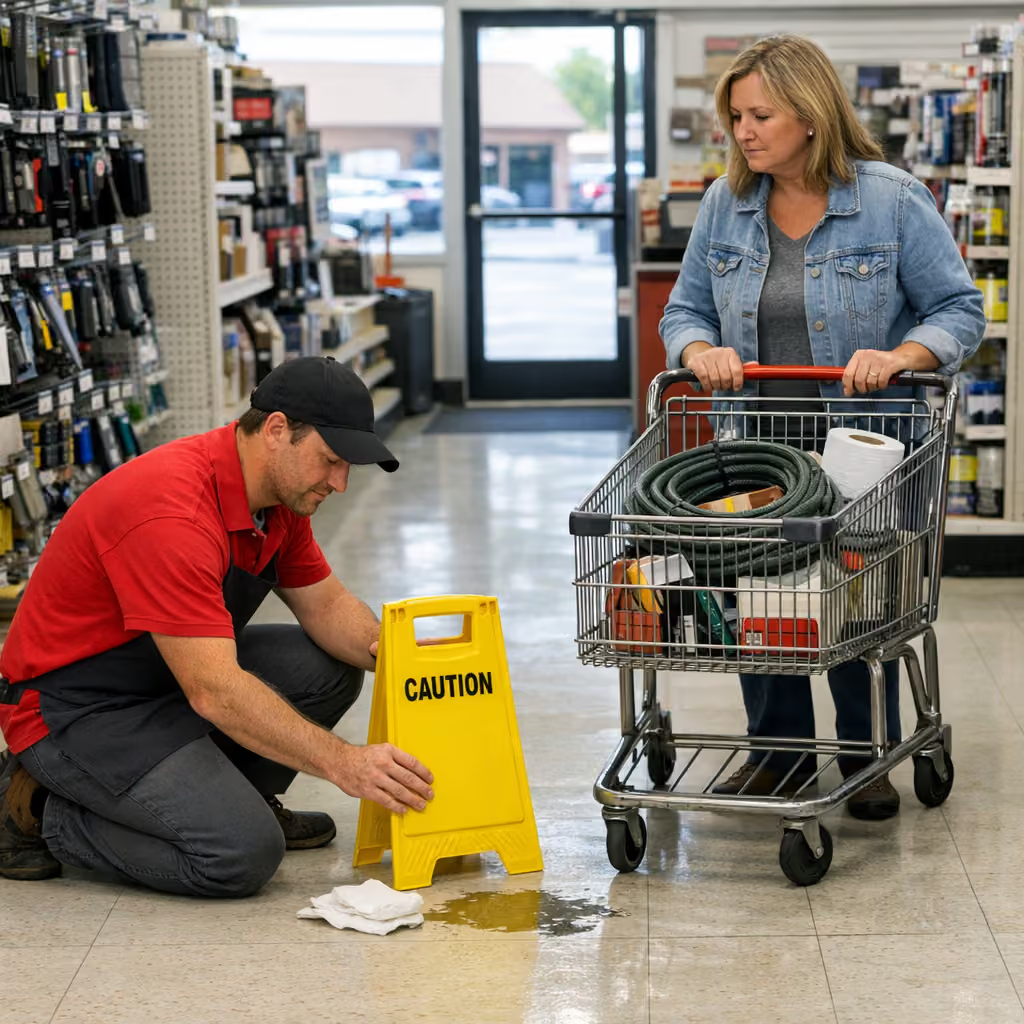
Where could someone get hurt?
Consider customer visits, deliveries, events and work at client locations. Ask how the policy addresses bodily injury allegations and where coverage applies.
Could your work damage someone else’s property?
A contractor, cleaner or service business may work around property it does not own. Ask about property damage, work in progress, completed work and applicable exclusions.
Do products or completed jobs create exposure?
Retail, food service and trade businesses may need to discuss product-related or completed-operations claims. Tell your agent exactly what you sell, make, install or repair.
How much protection and defense?
Compare limits per occurrence and in the aggregate, as well as how defense costs are handled. Client contracts and a landlord’s lease may call for specific limits or endorsements; confirm what the actual policy provides.
KNOW THE BOUNDARIES
General liability is not every business policy.
It generally does not substitute for protection for employee injuries, a company vehicle, your own building or inventory, or professional errors. Cyber, liquor and other specialized risks may require a separate policy or endorsement. Ask the team to review these exposures together rather than assuming they are covered.
See our business owners policy, commercial auto and workers’ compensation guides for those distinct questions.
Bring to your conversation
- What the business does, sells or installs
- Where employees or owners perform work
- Whether you hire subcontractors
- Any client or lease insurance requirements
- Current policy limits, renewal date and changes to operations
CONTRACTS & CERTIFICATES
Read the requirement before requesting a certificate.
A certificate of insurance summarizes certain policy information; it does not itself add an additional insured or change policy terms. If a client or landlord asks for specific wording, limits or endorsements, send the requirement to your licensed agent so the actual policy can be checked.
We begin with available Farmers options; where appropriate and permitted, our licensed team may explore approved additional markets. A licensed professional confirms eligibility, carrier availability and the coverage offered. A request does not bind, cancel or change coverage.
A useful question about subcontractors
If others perform work on your behalf, ask how your policy treats that work and what documentation you should request from them. Requirements and exclusions vary; a certificate alone is not a substitute for reading the relevant terms.
Colorado
Discuss premises, contractors’ work, customer visits and any insurance requirements in agreements. Colorado guide.
Nebraska
Include the full scope of work, locations, outbuildings and any subcontractors. Call (308) 216-3626 or view the Nebraska guide.
Arizona
Share the operations, locations and contract requirements you want reviewed. Arizona guide.
READY TO TALK?
Request a general liability review.
Choose Business insurance on the form and include your state. Our team will follow up to learn about your operations and what you need reviewed. This is a consultation request, not an instant quote or a way to bind coverage.
Call Colorado at (303) 799-0909, Arizona at (480) 296-7414, or Nebraska at (308) 216-3626. Do not put sensitive details or contract documents in the brief form; share current policy information securely when appropriate.
Kimberly Smith · Commercial Insurance Specialist
Consumer resource: The NAIC small-business insurance guide discusses general liability, business property, commercial auto and other common coverage questions. Your policy and applicable endorsements control.