
Water in the House: Burst Pipe, Sewer Backup, or Flood?
When water damages your home, its path matters. Compare burst-pipe, sewer-backup and flood coverage, then check limits, deductibles and exclusions.
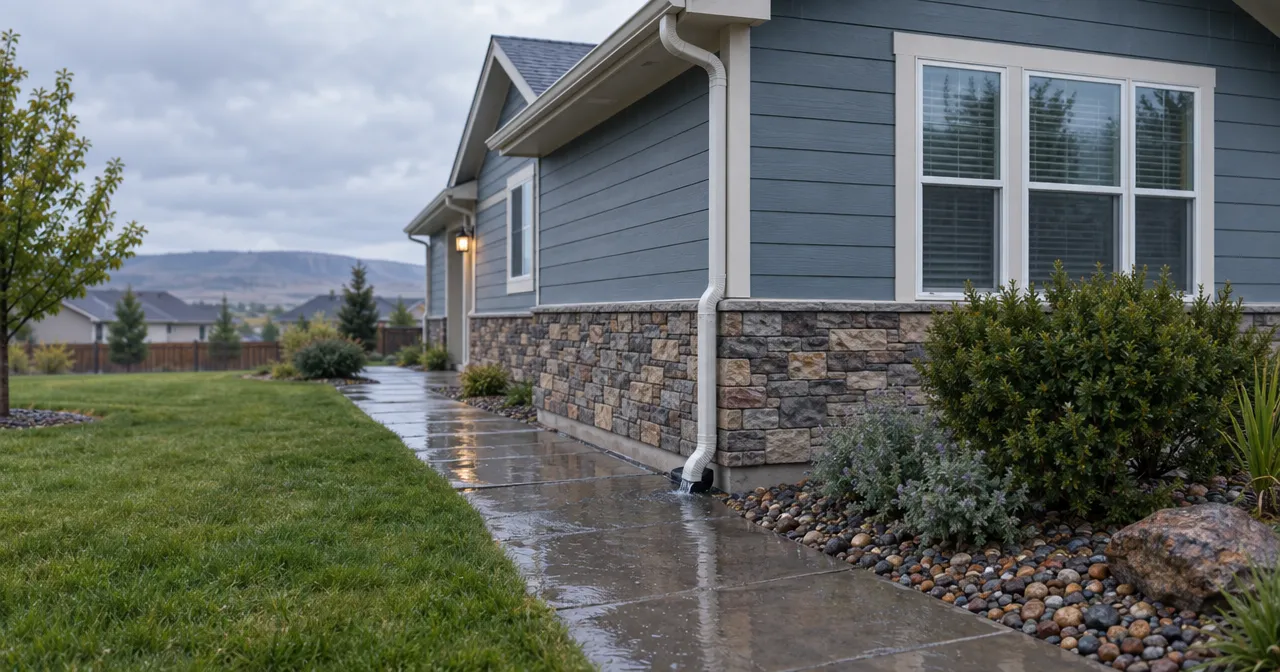
The floor is wet, the wall is stained, and someone says the basement “flooded.” That word describes what the room looks like, but it does not identify the cause of loss an insurer will evaluate. Water from a supply pipe, a sewer drain, and runoff that enters from outside can involve three different coverage questions. The distinction matters whether the property is a family home in Colorado, a Nebraska house with a finished basement, or an Arizona home after a heavy rain.
The starting point is not “Do I have water coverage?” It is where did the water come from, how did it enter, and what does each policy actually say? This guide explains the questions to ask before damage occurs and the facts to preserve if it already has. Coverage is determined by the applicable policy and the circumstances, not by a label on a claim form.
Three paths, three different starting points
| What you observe | Possible source to investigate | Coverage to check first |
|---|---|---|
| Water sprays from a broken supply line or escapes suddenly from an appliance connection. | Plumbing or appliance inside the home. | Homeowners dwelling and personal-property coverage, subject to its water-damage terms. |
| Water rises through a floor drain, backs up through a sewer line, or overflows from a sump system. | A drain, sewer or sump system. | Any water-backup or sump-overflow endorsement, its limit and exclusions. |
| Rainwater or other surface water runs across normally dry ground and enters through a door, window or foundation opening. | Outside flooding or surface runoff. | A separate flood policy and its definition of a covered flood. |
This table is a way to organize the conversation, not a claims decision. A rainstorm can coincide with a failed sump pump or a clogged drain. Water may enter by more than one route. When the entry point is unclear, document what you can see and ask the insurer to investigate; do not assume that calling the loss a “flood” or a “backup” settles the question.
If a pipe breaks inside the house
A sudden, accidental pipe break can damage drywall, floors, cabinets and belongings. Homeowners coverage often addresses the resulting damage if the event and property are covered. The cost to repair the aged pipe itself may be treated differently from the damage the escaped water caused. A slow leak or a known problem left unaddressed can raise a different coverage issue. Travelers’ explanation of burst-pipe claims distinguishes sudden damage from neglected leaks and discusses dwelling, belongings and possible loss-of-use coverage.
Picture a bathroom supply line that fails while the family is home. Water spreads into the hallway before the shutoff valve is closed. The questions are specific: Was the damage sudden? Which building materials and belongings were affected? Is there a deductible? How will damaged flooring or personal property be valued? If the house is temporarily unlivable after a covered loss, is additional living expense coverage available, and for which costs? None of those answers follows simply from the fact that a pipe broke.
A winter vacancy can change the analysis. Policies may impose conditions related to heat, water shutoff or reasonable care during freezing weather. If a Colorado or Nebraska property is vacant for part of the winter, ask the licensed team member to identify the actual wording rather than relying on a general promise that every frozen-pipe event is covered. The same caution applies to a second home, rental, or commercial property: start with the policy that insures that occupancy.
If water comes up through a drain or sump
A sewer backup may push wastewater through a floor drain or plumbing fixture. A failed or overwhelmed sump system may allow water to overflow into a lower level. Standard homeowners coverage usually does not automatically include these losses; an optional water-backup or sump-overflow endorsement may address certain resulting damage. Farmers’ water-backup guide identifies sewer backup and sump overflow as examples and also distinguishes the water damage from the cost of repairing the broken sewer lateral or pump.
Suppose a finished basement has flooring, drywall, a washer and stored household items. A backup limit of $5,000, if that is what the declarations page actually shows, is not the same as the home’s much larger dwelling limit. The damaged materials, cleanup and contents could exceed the endorsement limit. This is a hypothetical limit for comparison, not a description of a policy the agency offers. Ask what limit is available for your address, whether the endorsement covers the structure and belongings, whether cleanup counts toward that limit, and what deductible applies.
Do not treat “water backup” as a synonym for flood insurance. Surface water entering through a foundation opening or persistent groundwater seepage may not meet the backup endorsement’s covered cause, even if a drain is nearby. Conversely, a sewer-related loss might involve special flood-policy wording if it directly results from a qualifying flood. The cause and contract language matter. Ask separately about a service-line or equipment-breakdown option if you want to know who would pay to repair a damaged exterior sewer line or sump pump; the backup endorsement should not be assumed to pay for the equipment itself.
Practical prevention still matters. Keep drains clear, know where the main water shutoff is, and maintain sump equipment according to its instructions. An inspection, alarm or backup power source can reduce some risks, but none turns an uncovered cause into a covered claim. If there has already been a backup, describe the prior event honestly when seeking coverage; eligibility and terms may vary.
If water flows in from outside
A separate flood policy addresses a different kind of water loss. The National Flood Insurance Program (NFIP) uses a specific definition: a temporary inundation of at least two acres of normally dry land or two properties, including the insured property, caused by events such as overflowing waters or unusual, rapid surface-water runoff. The NFIP’s explanation of what qualifies as a flood is a useful starting point. A damp wall or one isolated puddle does not by itself prove that the definition is met; the insurer evaluates the facts and policy.
Imagine a street-level home after an intense storm. Water runs down a paved driveway and crosses a normally dry yard before entering the house. A homeowner might understandably call it a basement leak, while the insurer may need to examine whether a qualifying flood occurred and whether the damage was directly caused by that flood. Another house might take in water because a pipe failed during the same storm. The weather alone does not tell you which policy, if any, responds.
Most standard homeowners policies exclude flood. A flood policy is not automatically part of a home policy simply because both cover the same address. It may be written through the NFIP or an available private insurer; form, eligibility, limits and effective date can differ. A property’s mapped flood zone is relevant to risk and some lending decisions, but being outside a mapped high-risk area is not proof that flood damage is covered by homeowners insurance. For a comparison, ask what each proposed flood policy defines as a flood and what exclusions apply.
Pay special attention to lower levels and belongings
A finished basement is often where a family keeps a furnace, laundry equipment, furniture and boxes of belongings. Those items are not all treated alike. Under the NFIP, building coverage and contents coverage are selected separately and have separate deductibles; basement coverage is limited. The NFIP’s homeowner coverage overview and its basement-claim guidance describe how certain installed building equipment and certain powered appliances may be treated differently from ordinary furniture or stored possessions. Ask for the applicable list and definitions for your policy before counting on reimbursement for a finished room.
Do not confuse a homeowners policy’s additional living expense provision with an NFIP flood policy. NFIP flood coverage does not pay for temporary lodging or business income lost during repairs. That can materially affect a household that would need a place to stay, or an owner whose shop could not open after a flood. Other policy forms may differ, so compare the actual terms rather than assuming that buying “flood” also buys every related expense.
Read the limit and deductible together
A limit caps what a coverage can pay for a covered loss. A deductible is the amount the policyholder generally bears before a covered payment, subject to the contract. An exclusion removes or restricts a type of loss even when a limit appears on the declarations page. These details can vary across the main home policy, a water-backup endorsement and a separate flood policy.
Consider two illustrations, not estimates or promises of payment:
- If a covered pipe loss produces $12,000 of eligible repair costs and the applicable deductible is $1,000, the simple arithmetic is $11,000 before policy valuation, limits, exclusions and other claim adjustments.
- If a covered backup causes $12,000 of eligible damage but the endorsement has a $5,000 limit, the limit can be more important than the main dwelling limit. Ask whether the deductible is applied within or in addition to that limit under the actual form; do not assume the payout equals $5,000.
For an NFIP policy, separate building and contents deductibles can both matter when a qualifying event damages the structure and belongings. The premium may change when you select different limits or deductibles, but the useful comparison is what protection remains after those choices. A cheaper option with a small backup limit or no contents coverage is not equivalent to a higher-limit option.
What changes for a small business?
Water can interrupt operations as well as damage property. A shop owner may lease a storefront, own equipment, keep inventory below grade, and use a vehicle for deliveries. A business owners policy or commercial property policy should be reviewed for its water-damage wording; do not assume that a personal homeowners endorsement protects business inventory or that a standard business policy includes flood. If there is a flood policy, ask whether the business purchased building coverage, contents coverage, or both, and whether inventory is covered where it is stored.
Business interruption is a separate question. The cause of the shutdown, the property policy, the waiting period if any, and the relevant exclusions determine whether income protection responds. NFIP flood insurance does not replace lost business income. A small-business owner should discuss property, flood and any business-interruption coverage together rather than using one policy label as a complete plan. The agency’s commercial insurance guide explains the other pieces to review alongside property coverage.
If water has already entered, preserve the facts
Protect people first. Avoid standing water where electricity or sewage may be present; use qualified help when it is unsafe to enter or repair an area. If it is safe, shut off the source of water, take reasonable steps to prevent further damage, and keep records of what you do. Photograph the entry points, water level, affected rooms and damaged items before major cleanup when possible. Write down when the water appeared, whether a pipe broke, whether a drain reversed flow, and whether nearby ground or other properties were under water. Save repair invoices and receipts, and do not discard damaged property before asking the insurer how to document it unless safety requires removal.
Notify the insurer or claims contact promptly, even if you are uncertain which coverage applies. Ask whether more than one carrier or policy should receive notice, what emergency work is appropriate, and what proof the adjuster needs. A plumber’s report may help establish an entry route, but the carrier—not the plumber—makes the coverage decision. Do not wait for an insurance review request form to report an active claim; use the claims contact on your policy.
A short review before the next heavy rain
Bring the declarations page and any water or flood endorsements. Ask a licensed team member:
- Which sudden indoor plumbing losses are covered, and what are the exclusions for slow leakage, freezing or vacancy?
- Is water backup or sump overflow listed on the policy? What exact causes, property, cleanup costs, limits and deductible does it address? Does it repair the pipe or pump itself?
- Do we have a separate flood policy? Which building and contents limits and deductibles apply, and how does it treat a basement or lower level?
- When would proposed coverage begin? The NFIP’s purchase guide says most new NFIP policies have a 30-day waiting period, with specified exceptions. Confirm the date for any policy you are considering; an inquiry does not put coverage in force.
- If the property is rented, used for business, or owned as a second home, are we reviewing the right policy for that occupancy and the property actually at risk?
The answer may involve more than one policy. 5280 Insurance Agency is a multi-carrier office with Farmers as its primary carrier; available products and carriers depend on the state, applicant and situation. For an education-first comparison of your home and any separate flood or backup protection, see our home insurance guide and specialty coverage guide, then request a follow-up insurance review. That request is not an instant quote, a claim report, or a way to bind or change coverage.