
Stock Share Market Basics for Beginners: Exchanges, Brokers, and Orders
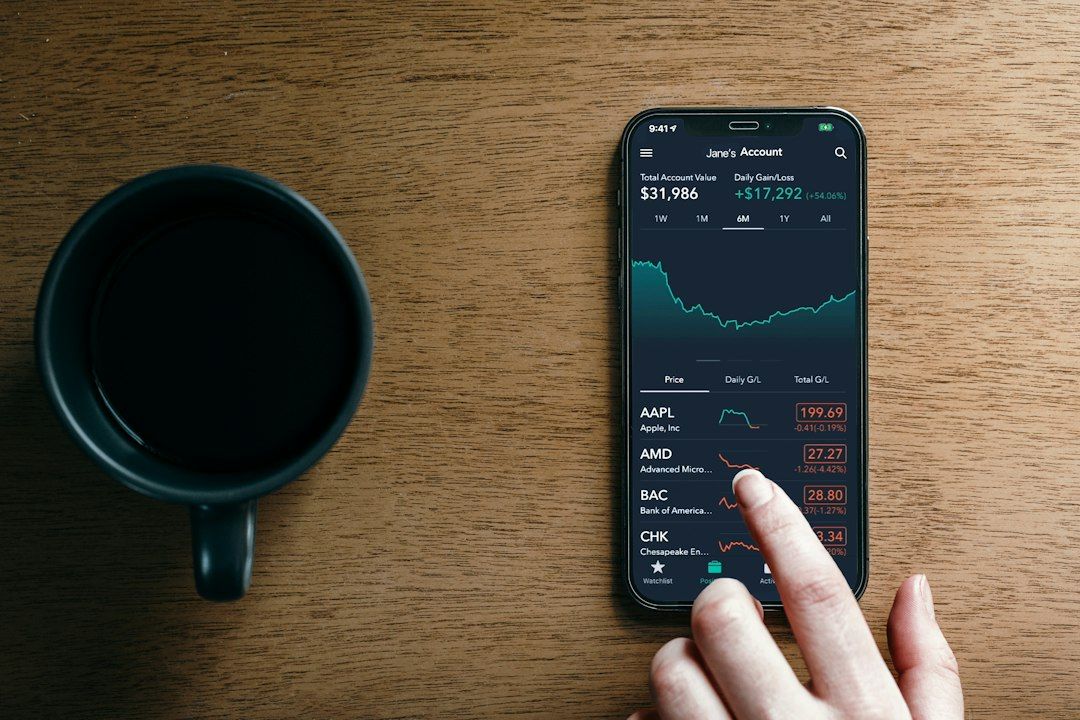
Opening an investment app for the first time can feel like walking into a crowded room where everyone is speaking a different language. You see blinking green and red numbers, scrolling ticker symbols, and a dizzying array of buttons asking if you want to execute a market or limit order.
Finances
By Matt Morand & Team · Published
4/8/2026
Breaking Down the Mechanics of the Market
Opening an investment app for the first time can feel like walking into a crowded room where everyone is speaking a different language. You see blinking green and red numbers, scrolling ticker symbols, and a dizzying array of buttons asking if you want to execute a market or limit order. For many people, this initial confusion is enough to make them close the app and delay their financial goals.
However, taking control of your financial future requires stepping past that initial hesitation. At 5280 Insurance Agency, we believe that financial peace comes from absolute clarity. We serve as a Personal CFO for our clients, helping them build long-term wealth through education and intentional planning. You do not need to be a Wall Street insider to grow your money, but you do need to understand the plumbing of the financial system.
By learning the mechanics of exchanges, brokerage firms, and order types, you remove the mystery from the process. Once you know exactly what happens behind the scenes when you tap "buy" on your screen, the financial world transitions from feeling like a casino to looking like a well-organized grocery store. Let us explore the mechanics of how trades actually work.
Overview: The Ecosystem of Investing
When you decide to invest your hard-earned money, you are entering a vast, highly regulated global ecosystem. Learning the stock share market basics for beginners means understanding that the market is not a single, monolithic entity. Instead, it is a complex network of buyers, sellers, intermediaries, and regulatory bodies all working together to facilitate the exchange of capital.
At its core, the premise of this ecosystem is remarkably straightforward. Publicly traded companies need capital to fund their growth, build new factories, or hire more employees. On the other side of the equation, everyday people and large institutions want a place to put their savings so their money can outpace inflation and grow over time. The stock market acts as the ultimate bridge between these two groups.
There are two primary phases of this market. The first is the primary market, which is where a company issues new shares to the public for the very first time through an Initial Public Offering. The second phase, and the one that most everyday investors participate in, is the secondary market. In the secondary market, investors trade previously issued shares among themselves. When you buy a share of a well-known technology company today, you are not handing your money to that company directly. You are buying that share from another investor who has decided to sell it.
Navigating this secondary market requires a basic understanding of three main components: the exchanges where the trades happen, the brokers who facilitate the trades, and the specific instructions you use to make the trade happen. Grasping these concepts is the first step in Understanding the Share Market for Beginners.
The Stock Exchanges: The Global Marketplaces
If you want to buy fresh produce, you go to a farmers market. If you want to buy shares of a publicly traded company, you go to a stock exchange. A stock exchange is simply a centralized marketplace where buyers and sellers come together to trade equity in companies. While there are many exchanges around the world, the two most prominent in the United States operate with distinct mechanical differences.
The New York Stock Exchange is the oldest and largest equities-based exchange in the world. Historically, it operated purely as a physical auction market. Traders would stand on a bustling trading floor and shout out their bids and offers. Today, while the physical floor still exists and handles complex transactions, the vast majority of New York Stock Exchange trading is done electronically. This exchange operates on an auction model, where buyers enter competitive bids and sellers enter competitive offers simultaneously.
The Nasdaq, on the other hand, was designed from its inception to be a purely electronic exchange. It does not have a physical trading floor. Instead, it operates as a dealer market. In a dealer market, individuals do not buy and sell directly from one another. Instead, they trade through a middleman known as a market maker. These market makers hold an inventory of specific stocks and stand ready to buy or sell to the public at publicly quoted prices.
Both of these major exchanges operate under strict hours, generally opening at 9:30 AM and closing at 4:00 PM Eastern Time on business days. Understanding how these exchanges function is a crucial part of mastering Stock Market Basics for Beginners, as it helps you realize that there is a highly structured, regulated environment ensuring your trades are executed fairly.
Brokerage Firms: Your Gateway to the Market
You cannot simply walk into the New York Stock Exchange with a handful of cash and ask to buy a few shares of your favorite retail company. The exchanges only deal with licensed members. Therefore, you need a licensed intermediary to act on your behalf. This intermediary is your brokerage firm.
A brokerage firm is a financial institution that facilitates the buying and selling of financial securities between a buyer and a seller. They serve as your personal gateway to the exchanges. When you open a brokerage account, you are hiring that firm to execute your trades, hold your financial assets securely, and provide you with the tax reporting documents you need at the end of the year.
Mastering share market basics requires understanding that not all brokers are identical. Full-service brokerages offer personalized advice, financial planning, and portfolio management, usually in exchange for higher fees or a percentage of your assets under management. Discount brokerages, which have become incredibly popular through smartphone applications, allow you to execute trades yourself with very low or zero commission fees. They provide the platform, but you provide the strategy.
Regardless of which type of broker you use, they all operate under the watchful eye of the Financial Industry Regulatory Authority and the Securities and Exchange Commission. Furthermore, reputable brokers utilize specialized clearinghouses to settle your trades securely. This means there is a systematic process to ensure that when you pay for a stock, the electronic shares are actually transferred into your account. As a firm that helps clients build a holistic financial strategy, we often guide our clients through Basic Investing for Beginners to ensure they select a brokerage platform that aligns with their long-term wealth goals.
Order Types: Speaking the Language of Trades
Once you have funded your brokerage account and selected a company you want to own, you have to tell your broker exactly how you want to buy it. Buying stocks for beginners often feels intimidating because of the terminology involved in order types. An order type is simply a set of instructions you give to your broker regarding the price and timing of your trade.
The most common instruction is the market order. A market order tells your broker to buy or sell a stock immediately at the best available current price. The primary advantage of a market order is speed. You are guaranteed that the trade will execute almost instantly during normal market hours. However, the drawback is that you are not guaranteed a specific price. In a fast-moving market, the price you actually pay might be slightly higher than the price you saw on your screen when you clicked the button.
To gain more control, investors use a limit order. A limit order tells your broker to buy or sell a stock only at a specific price or better. For example, if a stock is currently trading at $50 per share, you could place a limit order to buy it at $48. Your broker will only execute that trade if the stock price drops to $48 or lower. The advantage is total price control. The disadvantage is that if the stock price never drops to $48, your trade will never execute.
Finally, a stop order is used primarily to protect profits or limit losses. A stop order remains dormant until a stock reaches a specific price, at which point it automatically converts into a market order. If you own a stock that has grown to $100 per share, you might place a stop order at $90. If the market suddenly drops, your broker will automatically sell your shares once the price hits $90, protecting you from further downside. Understanding these mechanics is a vital part of Choosing Stocks and Building Your First Portfolio as a Beginner.
How It All Comes Together: The Journey of a Trade
To truly grasp purchasing stocks for beginners, it helps to walk through the exact journey of a trade from start to finish. Let us imagine you have saved a portion of your income, paid off your high-interest debt, and are ready to invest in a low-cost index fund.
First, you open your brokerage application on your phone or computer. You search for the ticker symbol of the fund you want to buy. You decide that you want price certainty, so you select a limit order and specify the maximum price you are willing to pay.
The moment you click submit, your broker's software takes over. The broker instantly routes your order to the exchange where that specific security is traded, or to a designated market maker. Advanced computer algorithms at the exchange scan the order book to find a seller who is willing to part with their shares at your specified limit price.
Once the matching system finds a willing seller, the execution happens in a fraction of a second. Your broker sends you a notification that the trade is complete. However, the actual transfer of money and ownership takes slightly longer. Under recent updates to federal financial regulations, the United States market now operates on a "T+1" settlement cycle. This means the actual legal transfer of funds from your account and shares into your account settles one business day after the trade date.
This seamless integration of brokers, exchanges, and automated clearing networks allows millions of individuals to participate in wealth building every single day. The complexity happens behind the scenes, leaving you with a smooth and secure investing experience.
Insights: Investing with Purpose and Patience
At 5280 Insurance Agency, our approach to wealth management and getting started in stocks is heavily influenced by our status as a RamseyTrusted provider. We believe that investing should never be treated as a get-rich-quick scheme or a form of entertainment. The modern accessibility of stock trading apps has made it dangerously easy to treat the global market like a video game.
Before you ever place your first market or limit order, we strongly recommend building a solid financial foundation. This means systematically eliminating all consumer debt and building a fully funded emergency reserve of three to six months of living expenses. Once that foundation is secure, you can begin investing with true confidence and peace of mind.
We encourage our clients to focus on long-term, goal-based planning rather than day trading or attempting to time market fluctuations. While it is important to know how the New York Stock Exchange and Nasdaq operate, your personal success will depend far more on your savings rate and your patience than on your ability to read daily price charts.
For many beginners, purchasing individual stocks introduces unnecessary volatility into their lives. We often guide clients toward diversified mutual funds or exchange-traded funds, which allow you to own tiny pieces of hundreds of companies through a single trade. If you want to learn more about how different investment vehicles protect your wealth, you can explore our guide on Investing 101: Accounts, Bonds, and Diversification Basics. The key takeaway is that understanding the mechanics of the market should empower you to make steady, logical decisions rather than emotional reactions to daily news headlines.
Conclusion
The stock market is one of the greatest wealth-building tools ever created, provided you approach it with the right knowledge and a disciplined mindset. By pulling back the curtain on the financial ecosystem, we see that the market is simply an organized network designed to connect those who need capital with those who want their savings to grow.
Understanding the unique roles of stock exchanges like the NYSE and Nasdaq helps you appreciate the scale of the global marketplace. Recognizing that your brokerage firm acts as your secure, regulated intermediary gives you confidence in the safety of your assets. Finally, learning the difference between market, limit, and stop orders equips you with the tools you need to execute your financial strategy precisely.
When you combine this mechanical knowledge with a values-driven, long-term financial plan, you stop being a passive spectator and become the active manager of your own financial destiny.
Ready to Take the Next Step?
At 5280 Insurance Agency, we are committed to acting as your Personal CFO, providing clear guidance and honest advice that adapts to every stage of your life. Whether you are looking to protect your family with the right insurance coverage or seeking to build long-term wealth through intentional investing, our team is here to simplify the complex.
Ready to take the next step? Sign up now to access exclusive insights tailored for your needs, or contact us today for a personalized quote that empowers your success. Let’s start your journey together!
About the author
Matt Morand, CIC, CRM, LUTCF, and the 5280 team share practical guidance drawn from insurance, risk management, financial services, and client education experience.
Have a question about this topic?
Talk with the 5280 team about the context, tradeoffs, and next step that fit your situation.