
Adding a Teen Driver to the Family Auto Policy: What to Review First
Before a teen starts driving, review when to notify your insurer, household drivers, liability limits, vehicle coverage, discounts, and state licensing rules.
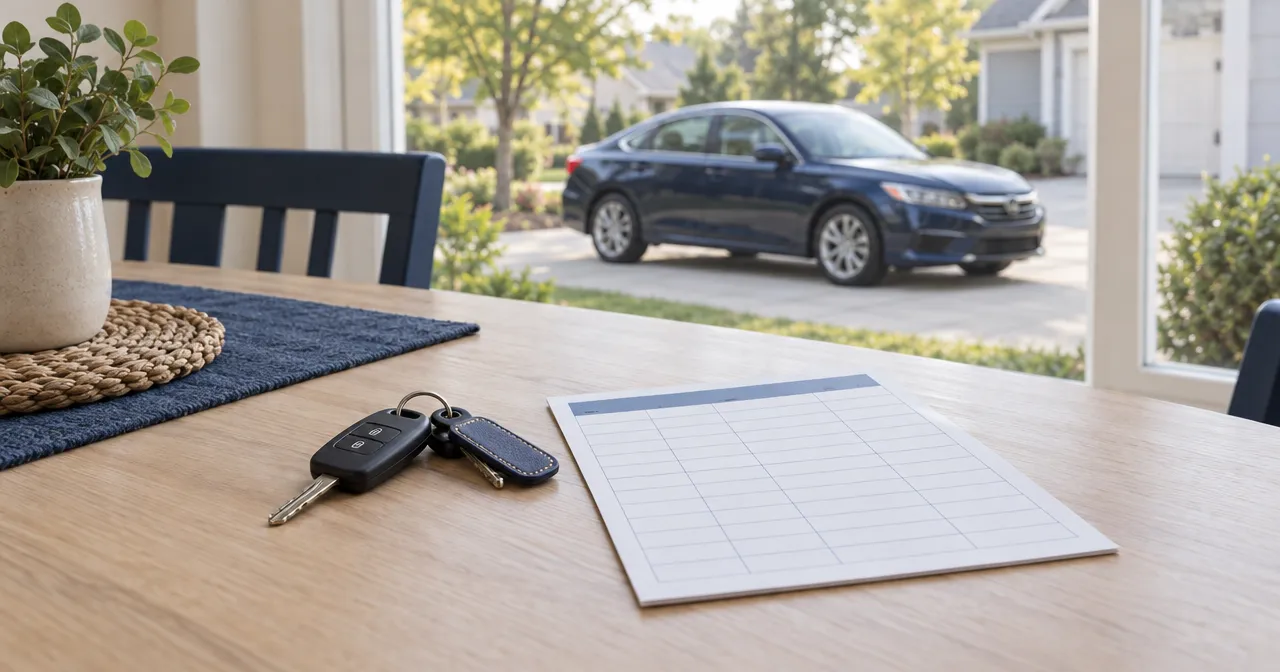
A learner’s permit on the kitchen table can change more than the family calendar. The same car may now be used for supervised practice, then solo trips to school or work. Before a teen drives, the family needs two distinct answers: What is the teen legally allowed to do? and How will the insurer treat this driver and vehicle? A license does not answer an insurance question, and an insurance card does not override a licensing restriction.
You do not have to know the perfect coverage amount before calling. Start with who will drive, which cars they will use, where the cars are kept, and when the teen’s driving privileges will change. Then compare the family’s limits and costs with a real new driver in the picture. The approach below applies to families in Colorado, Nebraska, and Arizona, but the policy and the state where the car is primarily garaged determine the details.
Call before the first drive—not only after the road test
Contact your insurance agent or carrier when your teen is preparing to drive with a permit. Say when the permit starts, who will supervise, and which household vehicles will be used. Ask whether the insurer wants the teen listed now, at licensure, or at another point; what information it needs; and when any change would take effect. Requirements for permitted drivers and newly licensed household members vary by policy and insurer. Do not assume a supervised driver is automatically covered because a parent is in the passenger seat, or assume the teen need not be disclosed until the renewal.
Call again before the teen moves from a permit to driving alone. An insurer may need a new license number, driver classification, vehicle assignment, or updated premium. Ask for the effective date and an updated declarations page or other written confirmation. If the teen passes a driving test on Friday, the household should not have to guess on Saturday whether its policy information is current.
A useful script is: “My child has a permit now and expects a license next month. They will practice in our sedan and may drive our SUV occasionally. What do you need to know at each stage, and how will the policy apply to both cars?” The answer may require a policy review rather than a one-line yes or no.
Make a driver-and-car map before comparing prices
An auto quote needs more than the teen’s age. List every licensed or permitted driver in the household, all vehicles, the address where each is normally kept, and the usual purpose of each trip. The NAIC’s auto insurance guide identifies household drivers, vehicle use, coverage choices, and driving history among the information that affects a quote and its terms.
Use a simple map:
| Question | Detail to bring to the review |
|---|---|
| Who drives? | Permit or license status, household members, and any regular drivers who live elsewhere. |
| What do they drive? | Each vehicle’s year and model, ownership or lease, and whether the teen will use one car regularly or share several. |
| Where is it kept? | The usual overnight address, including a different address during a school term. |
| Why is it used? | School, commuting, family errands, or any paid delivery or other work-related driving. |
| What is already insured? | Current declarations, liability limits, deductibles, physical-damage coverage, and any personal umbrella. |
Suppose a Colorado household has two cars: a paid-off older sedan and a financed SUV. The teen plans to use the sedan for school but sometimes takes the SUV to practice. Tell the insurer about both uses. Asking to assign the teen to the cheapest vehicle does not substitute for an accurate description of how the household actually drives. The financed SUV may also have lender-required physical-damage coverage, regardless of which family member drives it most often.
Household arrangements can be less tidy. If a teen divides time between parents’ homes, do not presume that two policies, one policy, or a permissive-use provision will automatically handle regular driving at both addresses. Explain the living arrangement, who owns each car, where it stays, and who has permission to use it. Insurers can then address the policy language and underwriting requirements that apply.
Review liability for the whole household, not just the new driver
Liability coverage generally addresses bodily injury or property damage that an insured driver causes to other people, up to applicable limits and subject to the policy. It is different from coverage that repairs the family’s own vehicle. When a new driver is added, compare the current bodily injury and property damage liability limits with the financial risk the household is willing and able to retain. State-required minimums establish a legal floor, not a personalized recommendation.
For example, imagine a crash involving another vehicle and a damaged roadside fence. The claim might involve injuries to other people as well as damage to the vehicle and fence. A property-damage limit that looked adequate when the policy was bought years ago deserves a fresh look alongside bodily-injury limits. If the household carries a personal umbrella, ask which auto policies and drivers it covers, what underlying limits it requires, and whether a newly added car or driver changes the umbrella review. Do not assume the umbrella fixes a gap in the underlying policy.
Also ask about protection if someone else causes the collision. Uninsured and underinsured motorist options, medical payments, and other injury-related coverages can differ by state and contract. Compare what is offered in your state and what is already on the declarations page, instead of treating a generic coverage label as a universal promise. The precise policy forms, exclusions, and endorsements control.
Decide what to do about damage to the family car
Collision coverage generally concerns damage to an insured car in a covered crash; comprehensive generally concerns other covered events such as theft, hail, or an animal strike. Both have terms, limits, and often separate deductibles. If the teen will drive a financed or leased vehicle, ask about lender or lease requirements before changing either coverage. On a paid-off vehicle, compare the premium and deductible with the car’s current value and the family’s ability to replace it.
Consider an older sedan worth substantially less than the family’s newer car. Keeping comprehensive for hail or theft while reconsidering collision might be worth discussing; the right choice depends on price, vehicle value, savings, and policy options. “Drop full coverage” is too vague to act on. Ask for each coverage and deductible by name, and find out how a total loss would be valued under the contract.
A higher deductible can reduce some premiums, but it shifts more of a covered loss to the family. If a $1,000 deductible would strain the emergency fund, compare that tradeoff with a lower deductible rather than looking only at the monthly bill. Check rental reimbursement and roadside assistance separately if a disabled car would disrupt school or work; neither should be presumed included.
Compare the changed premium without stripping out protection
Adding a novice driver may change the premium, but there is no reliable universal percentage or fixed “teen rate.” The result depends on the drivers, vehicles, location, selected coverage, discounts, and insurer’s rating approach. Ask for a before-and-after proposal that shows the same limits and deductibles so you can see what the new driver changes. Then ask separately what each proposed coverage adjustment would do to both premium and risk.
Ask about any available good-student, driver-training, multiple-vehicle, or other discounts. Eligibility, documentation, and savings differ by insurer and state. A completed class may be useful for learning even when it does not qualify for a particular discount. If a usage-based or telematics program is offered, ask what driving data it collects, which family members must participate, whether the price can go up as well as down, and when any discount is calculated. Decide whether the data-sharing and pricing rules fit your family before enrolling.
The cheapest way to show a teen on a quote is not necessarily an accurate way to insure the household. If an offer excludes a driver, restricts a vehicle, or changes limits, ask the reviewer to show that difference plainly. A meaningful comparison keeps the driver list, use, and coverage assumptions consistent.
Keep licensing rules separate from insurance rules
A teen may be insured for a vehicle but still be prohibited from driving at a particular time or with certain passengers. Graduated licensing rules govern what the new driver can do; the insurance policy governs the contract’s coverage. Treat both as part of the family’s plan, and verify the current rule directly with the licensing agency. Rules and exceptions can change.
- Colorado: The Colorado DMV’s under-21 permit and license guide explains supervised practice, the move to a minor license, and passenger and nighttime restrictions. Check the rules for the teen’s exact stage before planning a late event or a trip with friends.
- Arizona: The Arizona MVD Class G guide distinguishes the graduated instruction permit from the graduated license and sets out first-six-month restrictions for solo driving, passengers, and devices.
- Nebraska: The Nebraska DMV’s provisional operator’s permit guide describes limits on nighttime unsupervised driving and young passengers during the initial period. Nebraska also has other permit pathways, so check which credential your teen actually holds.
If your teen drives across state lines, is moving, or is attending school elsewhere, check the licensing rules for the trip or new residence as well as the insurer’s rules for garaging and regular drivers. A parent’s permission is not a substitute for the conditions printed on the driver’s credential.
Recheck the policy when the routine changes
A car goes to college. A teen may keep using a family car daily near campus, leave a car at home, or have no car at school but drive during breaks. Those are different exposures. Tell the insurer where the car is primarily kept and how often the student drives; ask whether a student-away or similar classification is available and what conditions apply. Do not remove a driver merely because classes start.
A part-time job involves driving. Commuting to work and making deliveries for work are not the same use. If the teen transports orders, uses a delivery app, or drives for another paid purpose, describe the activity before the first shift. A personal auto policy may exclude or limit some business uses; an employer’s insurance also should not be assumed to solve every exposure. If the work is tied to a family business, ask about the interaction with commercial auto coverage.
A second car enters the driveway. A new vehicle can change ownership, lender requirements, driver assignment, and the usual garaging location. Update the insurer before treating it as insured. The same applies when a household member moves out, stops driving, or begins regularly borrowing someone else’s car. An occasional loan to a friend is a different question from ongoing use by a household member; ask rather than relying on a general statement that “insurance follows the car.”
Put a driving plan next to the coverage plan
Insurance helps address covered financial losses after an accident; it cannot prevent one. The National Highway Traffic Safety Administration’s teen-driving resources recommend that families set expectations about passengers, nighttime driving, seat belts, phones, impairment, and supervised practice. Make the rules concrete: where the teen may drive this month, how late, who may ride, and whom to call if a safe ride home is needed. A practice log and regular check-ins can make the transition from supervised driving to solo trips less abrupt.
A useful plan covers bad days, not only ideal ones. Decide in advance that the teen should call if the car is damaged, a passenger is injured, or a citation is issued. Save the insurer’s claims number and the current proof of insurance where the family can find them. Do not promise the teen that every loss will be covered; report events accurately and let the carrier evaluate the policy and facts.
A five-minute checklist for the call
Before the first practice drive or the next licensing milestone, gather the declarations page and answer these questions with your agent or carrier:
- When must we disclose or list our teen at the permit stage and at licensure, and what written confirmation will we receive?
- Which cars will the teen actually drive, who owns them, and where are they normally parked overnight?
- Are our bodily injury, property damage, uninsured/underinsured motorist, and injury-related coverage choices still what we intend? Does an umbrella require a separate update?
- Which vehicles have collision and comprehensive, what are the deductibles, and do a lender or lease terms affect our choices?
- Which discounts or programs are available, what proof is required, and what changes if the teen goes to college or drives for pay?
A new driver is a good reason to look beyond one auto premium. 5280 Insurance Agency can talk through the family’s auto, home, and additional liability picture together, explain available options, and help identify what still needs to be confirmed with the carrier. If your household is approaching the permit or license stage, request a whole-picture insurance review or contact the team with the state, vehicles, and driving timeline. A request starts a conversation; it is not an instant quote and does not bind or change coverage.