
Paid Off Your Car? How to Decide Whether to Keep Collision and Comprehensive
Before dropping collision or comprehensive on a paid-off car, compare each premium and deductible with the car’s value and what you could afford to replace.
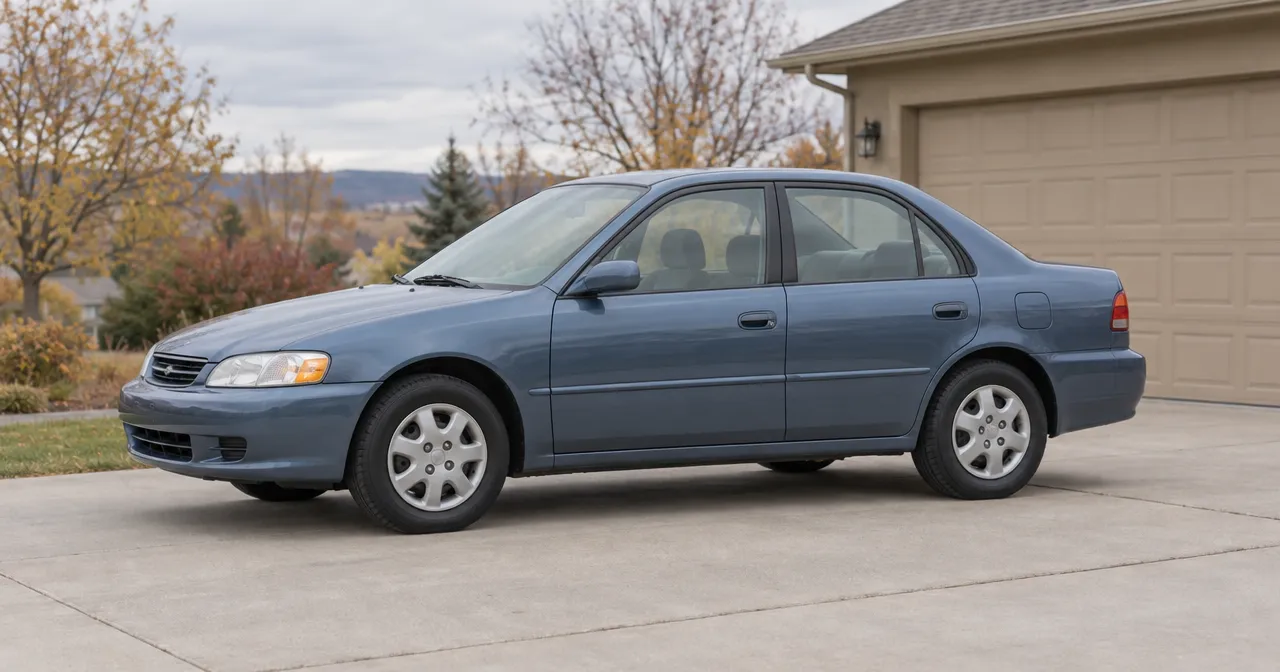
The last car payment changes what you owe the lender. It doesn’t change what a crash, theft or hailstorm could cost you. Before removing collision or comprehensive, ask two separate questions: What would the policy contribute if I lost this car, and what would I do if it contributed nothing? A paid-off sedan that gets you to work every morning may deserve a different answer from a spare car of the same value.
We suggest reviewing these coverages one vehicle at a time. Start with the loan paperwork, then compare what each coverage actually does, the cost to keep it, and how you’d get around without the car.
Confirm the payoff before changing coverage
Check that the lender has processed the payoff and that no loan or lease requirement still applies to that vehicle. If a lender is still listed on the declarations page, ask what payoff or lien-release documentation your insurer needs to update its records. Treat that update as a separate decision from removing coverage. You can take a former lender off the policy record without asking to drop collision or comprehensive.
If the account isn’t closed, check the contract before changing either coverage or raising a deductible. The Consumer Financial Protection Bureau’s explanation of force-placed insurance notes that a lender may buy coverage for its own interest and charge you for it if required insurance isn’t in place. And if another household car is still financed, its requirements don’t disappear when you pay off this one.
If you bought GAP with the loan, look at that agreement separately. The CFPB’s guide to insurance when financing a car explains that GAP addresses a possible shortfall between the car’s value and the outstanding loan or lease balance. Once that balance is zero, there’s no loan shortfall to cover. If you paid off the loan early, ask the GAP provider whether the agreement calls for cancellation paperwork or a refund of any unused portion. That question is separate from deciding how to insure the car itself.
Collision and comprehensive cover different losses
Collision generally helps pay for damage to your insured car after a covered impact with another vehicle or an object, or after a rollover. If you slide into a guardrail on an icy road, collision is the coverage you’d look to for your own car. If you’re legally responsible for damage to the guardrail, that’s a separate property damage liability question.
Comprehensive, sometimes called other than collision, generally addresses covered losses such as hail, theft, fire, vandalism and direct contact with an animal. Hitting a deer and swerving to miss one but hitting a guardrail are different events: the first generally points to comprehensive, the second to collision. The Nebraska Department of Insurance’s guide to types of auto coverage explains these distinctions. Neither coverage is a maintenance plan: a transmission that fails from ordinary wear is not the same as damage from a covered crash.
Liability addresses covered injuries or property damage you’re legally responsible for causing to others. It doesn’t repair your own car after you back into a post. If someone else damages your car, you may have a claim against that driver, but reimbursement can depend on identifying the driver, establishing fault and having collectible coverage. Uninsured motorist property damage, where available, has its own terms; don’t assume an uninsured motorist limit on your declarations covers the car itself. Our personal auto insurance guide explains where liability and other coverages fit. The payoff is a reason to review physical damage coverage, not a reason to cancel your auto policy or lower liability limits by default.
Estimate what a covered total loss could pay
Start with a rough estimate of actual cash value: what your particular car was worth immediately before the loss. Look at comparable cars in your area with similar age, trim, mileage and condition. Use them to build a range for planning, not as a promised settlement. The original purchase price, the final loan payment and the amount you’d spend on a newer replacement answer different questions. The NAIC’s consumer auto guide explains why a pricing guide alone doesn’t set a total-loss payment and why comparable local vehicles matter.
Suppose the insurer values your car at $6,500 after a covered collision total loss. With a $1,000 collision deductible, the simplified payment would be $5,500, before any other applicable adjustments. If you budgeted $8,200 to buy the vehicle you’d actually choose next, you’d still need $2,700 from another source. Without collision coverage or another source of recovery for that crash, you’d need the full $8,200. Those figures illustrate the difference between the insurer’s valuation and your replacement budget; they aren’t a quote or an estimate for any particular claim.
Run the same exercise for comprehensive using its own deductible. A high deductible matters on smaller losses as well as total losses. With $900 of covered hail damage and a $500 comprehensive deductible, the simplified payment would be $400. With a $1,000 deductible, the same covered damage would yield no payment. If glass damage is a concern, ask how windshield repair and replacement are treated under the actual policy. Don’t assume either has a deductible waiver.
Compare the savings with the extra cost you’d take on
Ask for the cost to keep each coverage and the net difference to your policy under each available option. Use the same vehicle, drivers, policy term and other coverage limits for the comparison. If you’re looking at a six-month policy, compare six-month figures or convert each one to an annual figure on the same basis. For a midterm change, distinguish a prorated credit on the next bill from the cost difference over a full term. If another benefit or discount changes with the coverage, include that in the comparison.
For example, suppose raising the collision deductible from $500 to $1,000 saves $72 a year. You’d take on up to $500 more out of pocket on one covered loss. At that quoted savings, it would take nearly seven claim-free years to set aside $500, assuming the savings stayed the same. That’s a way to understand the tradeoff, not a forecast of when you’ll file a claim. If you could pay $500 today but would struggle to pay $1,000, the higher deductible may not fit, even though the premium is lower.
Ask for side-by-side prices for keeping both, keeping just one, or removing both while leaving the rest of the policy as intended. Progressive’s explanation of when drivers reconsider these coverages discusses weighing the vehicle’s value and deductible against the cost of replacing it. The combinations and deductibles available to you depend on your insurer, vehicle, state and policy. A comprehensive-without-collision option, if available, leaves you paying for crash damage yourself unless another source of recovery applies. The reverse leaves events such as theft and hail outside those two coverages.
Here’s how to read the difference. Say keeping both costs $320 more per year than removing both, but keeping comprehensive alone costs $80 more per year than removing both, with the same comprehensive deductible. In this illustration, dropping collision saves $240; dropping comprehensive too saves another $80, not another $320. You’re deciding whether to take on the theft, hail and other covered noncollision risks for that additional $80 in savings. By pricing the options separately, you can tell which risk you’d be taking on for each dollar saved.
Make a transportation plan before deciding what to drop
If it’s your only dependable car: Imagine it’s totaled this week, not after several years of savings. Could you get to work, pick up children or reach an appointment while shopping for a replacement? Write down how much cash is available now, how much you’re comfortable spending without draining money set aside for other emergencies, and what temporary transportation would cost. A modest potential payment can still matter if it buys you time or keeps you from having to replace the car under pressure.
If it’s a spare that spends most nights outside: You may be comfortable paying for your own crash repairs or retiring the car after a collision, yet still want help with a theft or hail loss. That’s a reason to price comprehensive separately where available, rather than assuming both coverages must go together. If you could manage without the spare altogether, consider whether its likely payment after the deductible justifies either premium. Decide based on your ability to absorb a loss now, not on what you hope to save later.
Check rental reimbursement separately. It isn’t automatic just because you carry collision or comprehensive, and it generally depends on a qualifying loss and the policy’s limits. The Farmers coverage guide shows how rental reimbursement can be separate from other temporary transportation benefits. If your plan after a crash is “we’ll rent a car,” verify whether removing collision changes when rental reimbursement would apply. Look at the per-day and total limits or the number of covered days, and ask when the benefit ends if the car is totaled instead of repaired. If sharing another household car is your backup, make sure it works on the days both drivers need to be somewhere.
Verify what changes on the policy and when
Bring your current declarations, the payoff confirmation, a rough value range and a replacement budget to the review. For the specific vehicle, write down what you’re keeping, what you’re changing and the premium difference for the same policy term. Ask for the effective date and review the updated declarations or endorsement rather than assuming a conversation or price comparison changed anything. If you later want to restore a coverage, ask what the insurer requires; don’t count on adding it after damage has already happened.
At 5280 Insurance Agency, we can help you compare the options available for the car you paid off and check whether a proposed change affects anything else on the policy. A review is a conversation about the numbers and the risks you’re comfortable taking on. It doesn’t change your policy.